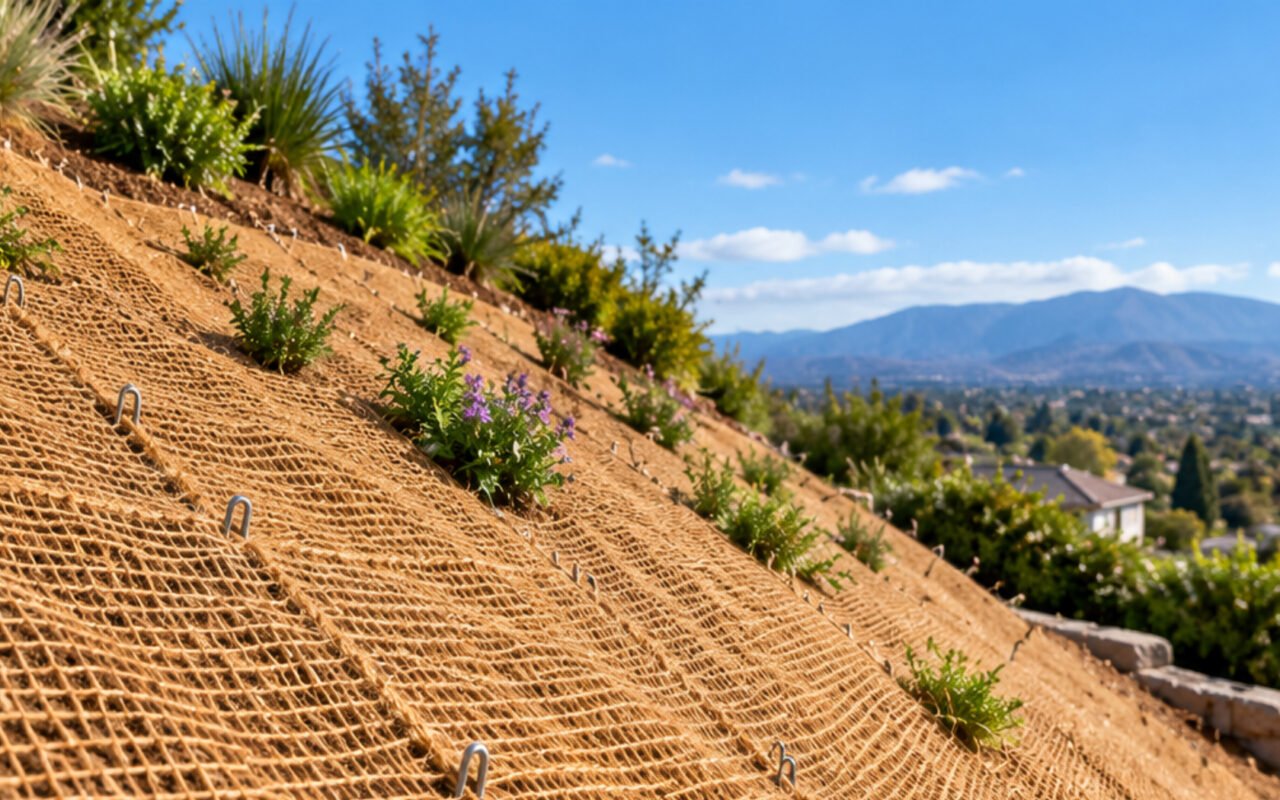
Hillside erosion control Ventura County homeowners can use includes biodegradable jute mesh, vegetation establishment, and proper surface drainage. These methods help reduce soil loss on exposed slopes, protect landscaped areas, and manage the effects of seasonal rainfall.
At J&S Landscape, we help homeowners protect bare hillsides and sloped outdoor spaces with practical erosion control solutions. One effective option for suitable properties is jute mesh erosion control netting, a natural material designed to protect exposed soil while supporting vegetation growth.
Understanding how erosion develops and how jute mesh works can help homeowners make informed decisions before heavy rainfall damages their landscapes.
Why Hillside Erosion Control Matters in Ventura County
Ventura County has many residential properties with sloped backyards, hillside landscaping, and areas of exposed soil. During dry periods, vegetation may become sparse, leaving the ground vulnerable when seasonal rain arrives.
Rainwater flowing downhill can loosen and transport soil, particularly where slopes lack adequate ground cover. Over time, this process may create small channels, wash sediment onto walkways, expose plant roots, and damage landscape improvements.
Effective hillside erosion control in Ventura County starts with understanding the slope, soil conditions, vegetation, and direction of water runoff.
When evaluating hillside erosion control Ventura County property owners should consider both temporary soil protection and longer-term solutions, such as establishing appropriate vegetation and improving drainage.
What Causes Soil Erosion on Hillsides?
Soil erosion occurs when water, wind, or other natural forces move soil from its original location. On hillsides, gravity and concentrated rainfall runoff can accelerate this process.
Healthy vegetation helps protect the ground in two ways. Leaves and plant cover reduce the direct impact of rainfall, while roots help hold soil together.
Without this protection, exposed soil becomes more vulnerable to erosion, particularly during heavy storms.
Common causes of hillside erosion include:
- Bare dirt slopes without established vegetation
- Heavy rainfall and concentrated surface runoff
- Recently graded or disturbed soil
- Steep hillsides with limited ground cover
- Poor drainage directing water across exposed areas
- Landscape irrigation that creates excessive runoff
Recognizing these conditions early can help homeowners take action before minor surface erosion becomes a more significant landscaping problem.
What Is Jute Mesh Erosion Control?
Jute mesh, also called jute erosion control netting, is a biodegradable material made from woven natural plant fibers. It is installed over exposed soil to help protect the surface from rainfall impact and reduce soil movement.
The open-weave design allows water to reach the soil while helping slow some surface runoff. It also allows seeds and plants to grow through the netting.
As vegetation becomes established, developing root systems can provide longer-term soil protection. The jute material gradually decomposes over time, depending on the product and environmental conditions.
Jute mesh is commonly used for temporary erosion protection on suitable bare slopes, recently disturbed soil, and landscaped hillsides where vegetation is being established.
Benefits of Jute Mesh for Hillside Erosion Control
1. Helps Reduce Surface Soil Erosion
Jute mesh creates a protective layer over exposed ground, helping reduce the direct impact of rainfall on loose soil.
When properly installed, the netting can help slow shallow surface runoff and reduce the movement of soil particles downhill. This makes it useful for suitable slopes that are vulnerable to seasonal erosion.
2. Supports Vegetation Establishment
The open-weave structure allows grass, ground cover, and other suitable plants to grow through the material.
As vegetation develops, plant roots help stabilize the upper soil layer. Combining temporary jute mesh protection with appropriate planting can provide a more complete erosion control strategy than relying on netting alone.
3. Helps Maintain Soil Moisture
Jute mesh can help reduce moisture loss from exposed soil by providing partial surface coverage.
Maintaining suitable soil moisture may support seed germination and early plant growth, particularly when the erosion control project includes revegetation.
4. Provides Biodegradable Soil Protection
Jute is a natural plant fiber that gradually decomposes. Unlike permanent synthetic netting, biodegradable jute mesh is intended to provide temporary protection while other erosion control measures become established.
Its useful lifespan varies depending on the product, rainfall, soil moisture, and site conditions.
5. Helps Protect Recently Disturbed Slopes
Landscaping, grading, and other outdoor improvements can leave areas of soil exposed.
Installing suitable erosion control netting after soil preparation can help protect these areas while vegetation develops. This may be particularly useful before the rainy season, when exposed slopes are more vulnerable to runoff.
How Is Jute Mesh Installed on a Hillside?
Professional jute mesh installation begins with evaluating the slope, soil conditions, water movement, and existing vegetation. The goal is to keep the material in close contact with the soil so water does not easily flow beneath it.
A typical installation process includes:
- Evaluate the hillside: Identify erosion patterns, slope conditions, and areas where water concentrates.
- Prepare the soil: Remove large debris and address surface irregularities that could prevent proper contact between the netting and soil.
- Plan vegetation: Incorporate suitable seeding or planting when appropriate for the project.
- Position the jute mesh: Roll the material over the prepared slope following the manufacturer’s installation requirements.
- Secure the material: Use suitable landscape staples or anchors, with proper overlaps and edge treatment, to keep the netting in place.
- Inspect the installation: Check that the material remains secured and that concentrated runoff is not flowing underneath it.
Installation requirements vary by product, soil conditions, and slope steepness. Very steep or unstable hillsides may require engineered stabilization methods rather than jute mesh alone.
Can Jute Mesh Stop Erosion on a Steep Hillside?
Jute mesh can help reduce surface erosion on suitable slopes, but it is not a solution for every hillside.
On very steep slopes, areas with concentrated water flow, or hillsides showing signs of ground movement, erosion control netting alone may not provide adequate protection.
These conditions may require additional drainage improvements, engineered erosion control systems, or evaluation by a qualified professional.
It’s important to distinguish ordinary surface soil erosion from deeper slope instability. Jute mesh is designed primarily to protect the soil surface; it does not prevent landslides or structurally stabilize an unstable hillside.
Combining Hillside Erosion Control with Proper Drainage
One of the most important parts of hillside erosion control is managing the water that causes soil to move.
Even a properly installed erosion control blanket may be overwhelmed if large amounts of runoff are directed across an exposed slope.
Depending on the property, drainage improvements may help redirect concentrated water away from vulnerable areas. These improvements can include appropriate grading, surface drainage systems, or subsurface drainage where necessary.
For properties with retaining walls, perforated drainage pipes surrounded by clean gravel may help manage water accumulating behind the structure.
Learn more about drainage solutions in Ventura County, including channel drains and French drains.
When Should Homeowners Install Hillside Erosion Control?
The best time to address hillside erosion is before significant soil loss occurs.
Homeowners should consider erosion control improvements when they notice exposed dirt, small channels forming after rainfall, sediment collecting at the bottom of slopes, or vegetation struggling to establish.
Planning ahead of seasonal storms allows time to evaluate the slope, prepare the soil, install erosion control materials, and begin establishing suitable vegetation.
For recently graded or disturbed slopes, erosion protection may be especially important because the soil has not yet developed stable plant cover.
Homeowners should also monitor irrigation runoff. Excessive watering or improperly directed irrigation can contribute to soil movement even when rainfall is limited.
Frequently Asked Questions About Hillside Erosion Control in Ventura County
Does Jute Mesh Prevent Hillside Erosion?
Jute mesh helps reduce surface soil erosion by protecting exposed ground from rainfall impact and slowing some shallow runoff. It creates a temporary protective layer that can help keep loose soil in place while vegetation becomes established.
However, jute mesh does not guarantee that erosion will stop completely. Its effectiveness depends on the slope, soil conditions, installation quality, and amount of water flowing across the area.
For slopes with significant runoff or instability, additional drainage or stabilization measures may be necessary.
How Long Does Jute Erosion Control Netting Last?
The lifespan of jute erosion control netting depends on the specific product, environmental conditions, moisture exposure, and installation.
Some jute erosion control products are designed to provide approximately one year of temporary protection, but actual performance varies. The material gradually breaks down as it is exposed to moisture and natural environmental conditions.
For longer-term erosion protection, jute mesh is often combined with vegetation so developing root systems can help protect the soil after the netting decomposes.
Can Grass and Plants Grow Through Jute Mesh?
Yes. The open-weave design of jute mesh allows grass, ground cover, and other suitable vegetation to grow through the material.
When combined with appropriate soil preparation, planting, and irrigation, jute mesh can help protect exposed ground during the early stages of vegetation establishment.
As plants develop, their root systems help hold soil together and provide longer-term protection against surface erosion.
Is Jute Mesh Suitable for Steep Hillsides?
Jute mesh may be appropriate for some sloped landscapes, but suitability depends on the hillside’s steepness, soil conditions, and water flow.
Very steep slopes, concentrated drainage channels, or areas showing signs of soil movement may require more substantial erosion control or engineered stabilization measures.
A professional site evaluation can help determine whether jute mesh is appropriate or whether additional protection is necessary.
Is Jute Mesh Environmentally Friendly?
Jute mesh is made from natural, biodegradable plant fibers. It is commonly used for temporary erosion control because the material gradually decomposes instead of remaining permanently in the landscape.
It can be a useful option for projects where temporary soil protection and vegetation establishment are the primary goals.
Environmental suitability also depends on the complete installation, including the netting product, anchors, site conditions, and surrounding landscape.
What Are the Warning Signs of Hillside Erosion?
Common warning signs include exposed roots, loose soil washing downhill, small channels forming after rainfall, sediment collecting near walkways, and bare areas where vegetation has disappeared.
Homeowners may also notice runoff cutting across slopes or soil accumulating at the base of retaining walls.
These conditions should be evaluated before additional rainfall causes more extensive surface damage. Cracks, bulging ground, or significant slope movement may indicate a more serious stability problem requiring qualified professional assessment.
Can Drainage Improvements Help Prevent Hillside Erosion?
Yes. Proper drainage can help reduce hillside erosion by managing concentrated runoff before it washes soil downhill.
Depending on the property, improvements may include redirecting surface water, correcting grading problems, or installing suitable drainage systems.
Combining drainage improvements with jute mesh and appropriate vegetation can provide a more complete erosion control strategy than relying on a single method.
Professional Hillside Erosion Control for Ventura County Homes
Every hillside has different soil conditions, drainage patterns, vegetation, and erosion risks. Choosing an appropriate solution requires understanding how these factors interact.
For homeowners researching hillside erosion control Ventura County properties may benefit from biodegradable jute mesh, improved drainage, and vegetation establishment, depending on site conditions.
J&S Landscape provides practical landscaping solutions for bare slopes and exposed hillside areas, including professional jute mesh installation for suitable residential projects.
For additional information about erosion and sediment control, explore the U.S. Environmental Protection Agency’s stormwater and erosion control resources.
Contact J&S Landscape for Hillside Erosion Control
Don’t wait until seasonal rainfall causes visible soil loss or damage to your landscape.
Whether you’re dealing with a bare backyard slope, recently disturbed soil, or recurring surface erosion, J&S Landscape can help evaluate appropriate landscaping and erosion control options.
Contact J&S Landscape today to discuss hillside erosion control solutions for your Ventura County property.
Visit Irrigation805.com to learn more about our landscaping services and request an estimate.